
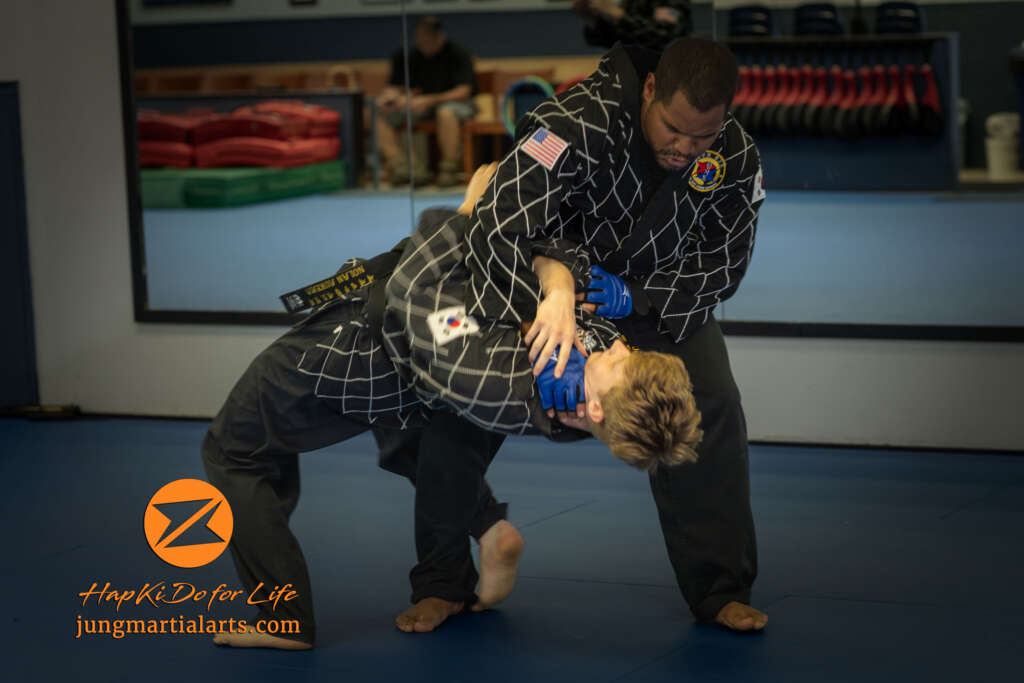
The Balance of Body, Mind, and Spirit

Understanding Triangles in HapKiDo - Part 1

Share this

"Be skilled enough to control, and wise enough to know when to use it".

In Authentic Korean Martial Arts, particularly JungMu HapKiDo, we often describe the foundation of training as a triangle. A triangle is the simplest, yet strongest structural shape known to man, but only if all three sides are present. In HapKiDo, these sides represent the physiological, psychological, and philosophical aspects of training. They are the Body, Mind, and Spirit, each essential, each supporting the others.

If one side is missing, the structure collapses. A martial artist who focuses only on the body, develops skill without understanding. One who trains only the mind, lacks the ability to act when needed. One who seeks only the spiritual risks words without strength to back them. True martial arts require all three, balanced and refined, to create a complete martial artist.

This is the deeper meaning behind the phrase I say often in classes: “Be skilled enough to control, and wise enough to know when to use it.” Skill comes from the physical side of the triangle, wisdom is born from psychological clarity and philosophical depth, and together they form the strong, unshakable structure of a martial artist who can act with purpose and restraint.

HapKiDo training builds not just techniques, but character. It shapes a body capable of defending life, a mind capable of making calm, courageous decisions, and a spirit guided by honor and compassion. Without this harmony, martial arts are incomplete. With it, they become a lifelong path of strength, discipline, and peace.

Physiological Control – The Skill Sets

The first side of the HapKiDo triangle is the physiological aspect, the physical training of the body. It is here that skill begins to take shape through repetitive, disciplined practice. This is where we develop strength, balance, coordination, speed, timing, and precision. Every stance, every strike, every throw or joint lock is first learned as a physical movement repeated thousands of times until it becomes instinctive.

But this physical training is far more than just exercise. HapKiDo is not about raw power; it is about controlled power. It is about having the ability to stop an opponent without unnecessary harm, to neutralize force without escalating it. The hours spent on the mat are designed to give a martial artist control over their own body before they ever try to control someone else.

Physiological control means you can stay rooted in a stance even under pressure. It means your grip is strong but measured, your strikes are accurate and never reckless. It is the foundation of skill, the first part of the phrase “Be skilled enough to control.” Without this side of the triangle, there is no ability to protect yourself or others when danger arises. But physical skill alone is not enough; it must be joined with mental clarity and deeper wisdom to become a true martial artist.

Psychological Control – Will Guided by Intellect

The second side of the HapKiDo triangle is psychological control, the training of the mind and emotions. Physical skill alone is not true martial arts if the mind is not equally developed. A martial artist must learn to control not only their techniques but also their thoughts, fears, impulses, and reactions under pressure.

Every confrontation, whether on the mat or in life, carries an emotional charge. Adrenaline floods the body, fear tightens the chest, anger tempts us to react too soon or too harshly. Without psychological control, even the most skilled martial artist can make dangerous mistakes. HapKiDo training teaches focus, awareness, and emotional discipline to counter this.

Through mental training, you learn to breathe steadily, to slow racing thoughts, to stay calm when confronted, and to see clearly when others are clouded by emotion. This control of the mind allows you to choose your response instead of simply reacting. It gives you courage to stand your ground when fear says “run,” and restraint to hold back when anger says “strike.”

Psychological control strengthens the second part of the phrase, “…and wise enough to know when to use it.” It builds the inner stability required to make the right choice under stress, ensuring that physical skill is never misused. A strong mind holds the line between unnecessary violence and necessary action.

Yet, even with a trained body and a disciplined mind, something is still missing. Without philosophy to guide them, skill and mental strength lack direction. That is where the third side of the triangle, the philosophical aspect, completes the structure.

Philosophical Control – The Spirit Lights the Path

The third side of the HapKiDo triangle is philosophy, the spirit and moral compass that gives meaning to skill and strength of mind. Without philosophy, martial arts risk becoming nothing more than violence wrapped in technique. It is philosophy that elevates martial training into a path of discipline, honor, and respect for life.

Philosophical control teaches a martial artist why they train, not just how. It defines the values that guide every decision, every technique, every action both on and off the mat. Authentic Korean martial arts have long emphasized principles such as humility, compassion, courage, integrity, and self-restraint. These are not abstract ideals; they are practical safeguards against misuse of power.

A martial artist guided by philosophy understands that the greatest victory is not defeating an opponent, but preventing harm before it begins. They know that their skill exists not for domination, but for protection, peace, and the preservation of life. This wisdom ensures that every choice made in conflict is deliberate, measured, and just.

This completes the meaning of the phrase: “Be skilled enough to control, and wise enough to know when to use it.”

  • The body gives you skill and capability.
  • The mind gives you calm judgment under pressure.
  • The spirit gives you the wisdom to use your skill honorably and only when necessary.

When all three sides of the triangle are present and balanced, HapKiDo becomes more than a set of techniques. It becomes a way of life, shaping not just how you fight, but how you live, how you treat others, and how you face challenges both on and off the mat.

"Skill without wisdom is dangerous, wisdom without courage is empty, and courage without skill is powerless".

Living the Art Beyond Technique

The true path of HapKiDo is not measured by the belts you earn or the techniques you master, but by the harmony you build between body, mind, and spirit. Each side of the triangle is essential. Skill without wisdom is dangerous, wisdom without courage is empty, and courage without skill is powerless. Only when all three are developed together does a martial artist truly embody the meaning of the art.

Every class, every repetition, every lesson is an opportunity to strengthen this balance. As you train, ask yourself not only how well you can execute a technique, but also how well you can stay calm under pressure and how wisely you can choose when to act. This is the difference between knowing martial arts and living martial arts.

In the end, our goal is not to become fighters, but to become protectors of ourselves, of others, and of the values that give life meaning. That is the heart of HapKiDo. That is the message behind the phrase:
“Be skilled enough to control, and wise enough to know when to use it.”
It is a lifelong journey of strength guided by honor, shaping not just the martial artist, but the person within.

See you on the mat!

Love & Respect,

Terry ♥🙏👊

Share this

Book Warrior’s Portrait

[ssa_booking type=warrior-portraits-single]

Stay Connected!

Join JMA Alerts

Events, Closures, Schedule Changes, News and more…fast.

Choose text, email, or both.

 Unsubscribe anytime.

[uws_form type='subscribe' group_id='1' name='no']

Headline

Never Miss A Story

Get our Weekly recap with the latest news, articles and resources.
Cookie policy
We use our own and third party cookies to allow us to understand how the site is used and to support our marketing campaigns.