
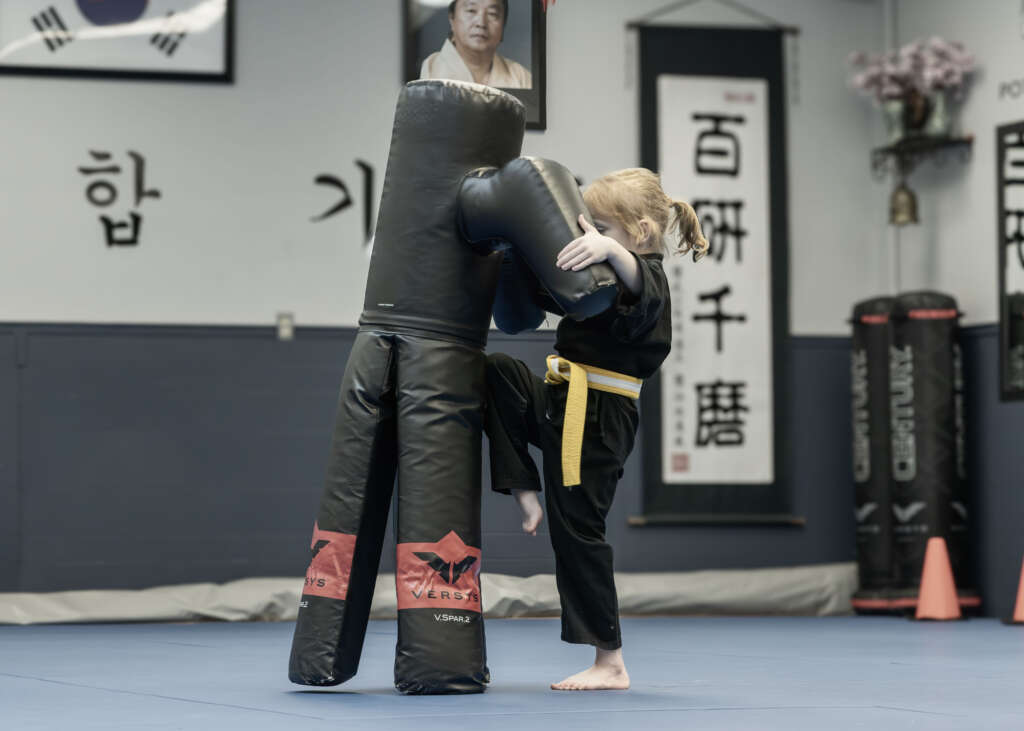
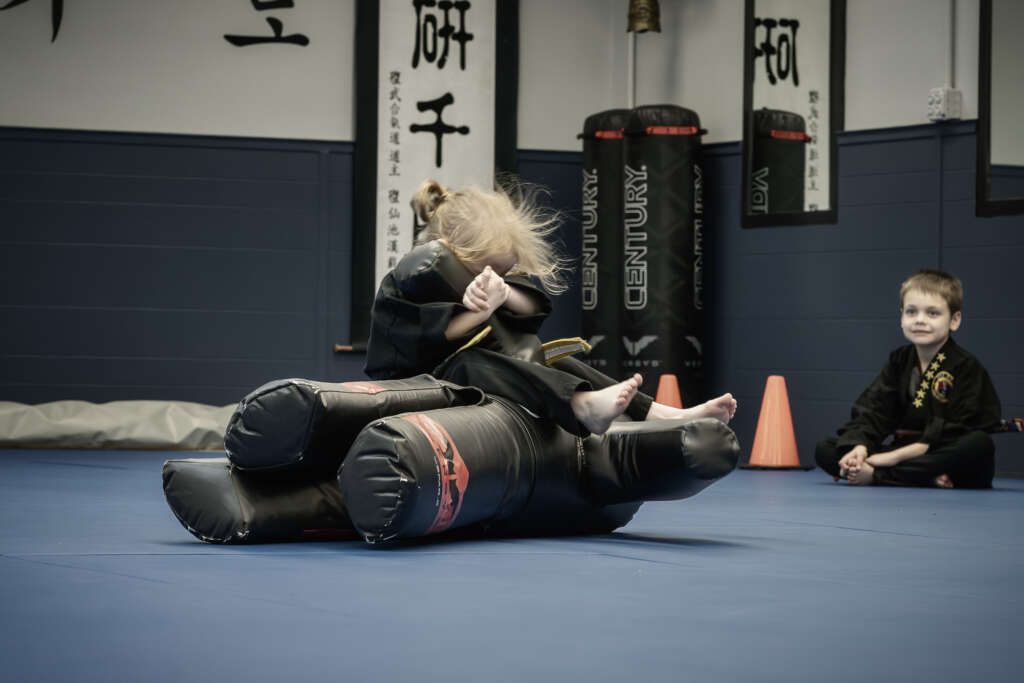
Friday February 20th, we held two separate grading sessions, and 10 students successfully graded up.
It was a meaningful evening for our dojang community, not only because students earned promotions, but because of the character and discipline they demonstrated throughout the process. From our youngest Tiny Tiger, age 5, to the oldest student, age 13, each student stepped into the grading circle and met the moment with courage.
Nerves were present at the beginning, as they should be. Grading is a challenge. But as the sessions progressed, breathing settled, focus sharpened, and confidence began to show. That is one of the most important lessons in the grading experience, students learn that calm can be trained, and confidence can be built through preparation.
At JMAFC, students do not simply attend a grading and receive a belt. They must earn their place in the grading circle.
That opportunity is built through consistent attendance, steady effort, attention to detail, and the willingness to improve over time. By the time a student is invited to grade, the process has already been underway for months through regular training.
This is an important part of our educational approach. A belt is not a participation reward. It is recognition of demonstrated growth, developing skill, and readiness for the next level of training.
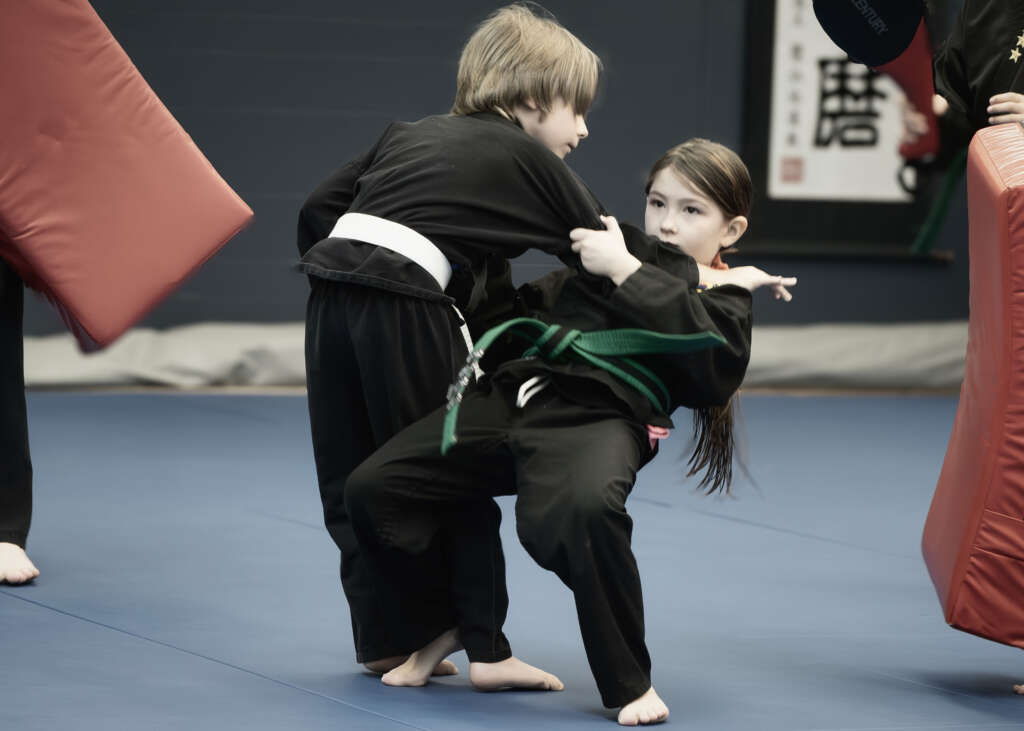
Each student completed three rounds in the Spirit Circle, demonstrated required skill sets, and performed a breaking technique.
The Spirit Circle is a central part of our grading format because it teaches more than technique alone. In the center of the circle, students must respond in real time. They do not know exactly how the next training partner will move or how the moment will unfold. They must maintain their base, physically and mentally, while adjusting under pressure.
This is one of the most valuable aspects of training. Students learn to stay structured while circumstances change. They learn to stay present instead of rushing. They learn to think clearly while moving. These are martial skills, and they are also life skills.
A grading environment is intentionally different from a regular class.
Students are performing in front of their peers, a review board of five Black Belts, and family members gathered to support them. For a child, that is a significant test of composure.
Many students experience a rise in heart rate, a shift in breathing, and the mental pressure that comes with being observed. This is where martial arts training becomes more than physical technique.
They learn to control their breath, the bridge between mind and body. They learn to settle themselves, focus on the task in front of them, and persevere. They begin to understand that pressure does not need to control them. With training, they can learn to control themselves within pressure.
This lesson serves them well beyond the dojang, in school, in sports, and in life.
Another meaningful part of this grading was the review board itself. Three of the Black Belt judges seated on the board began their training journeys when they were tiny tigers, the same ages as some of the students now entering the Spirit Circle.
Today, they are skilled Hapkidoin and exceptional teens. They served on the grading board with maturity, focus, and professionalism, and they represented the values of long term training with excellence.
For younger students and families, this is an important example. The children grading today are not only being evaluated, they are also being shown what is possible through consistency. They are seeing older students who stayed committed, continued to grow, and developed into capable martial artists and respectful young leaders.
This is one of the strengths of a healthy dojang culture, students can see the path ahead of them in the students who came before them.
Two students gave a particularly strong example of composure and precision during this grading.
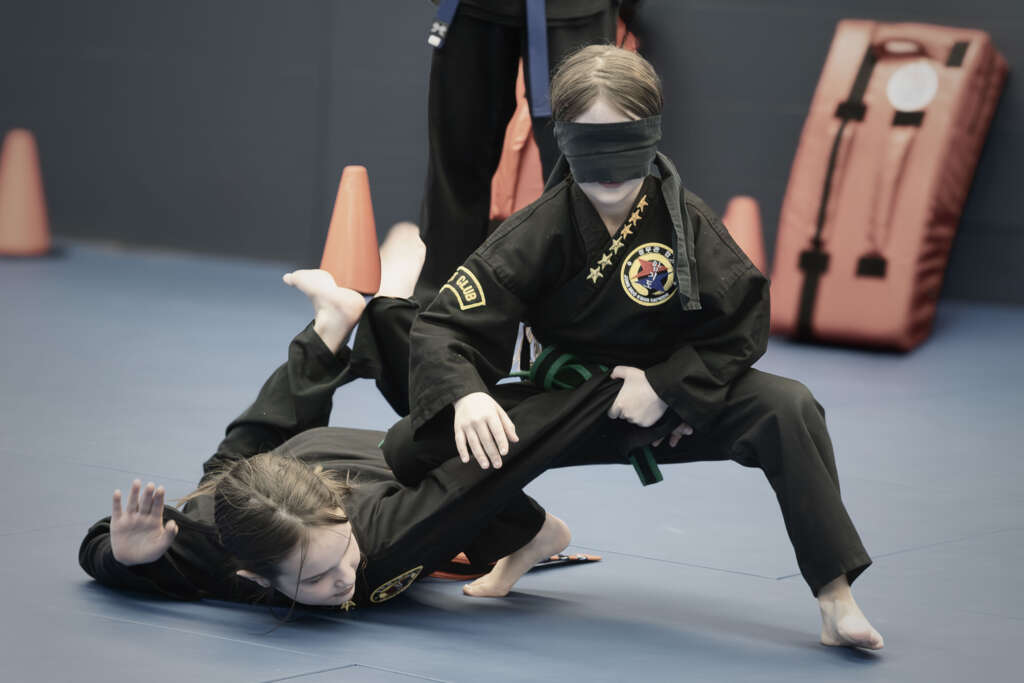
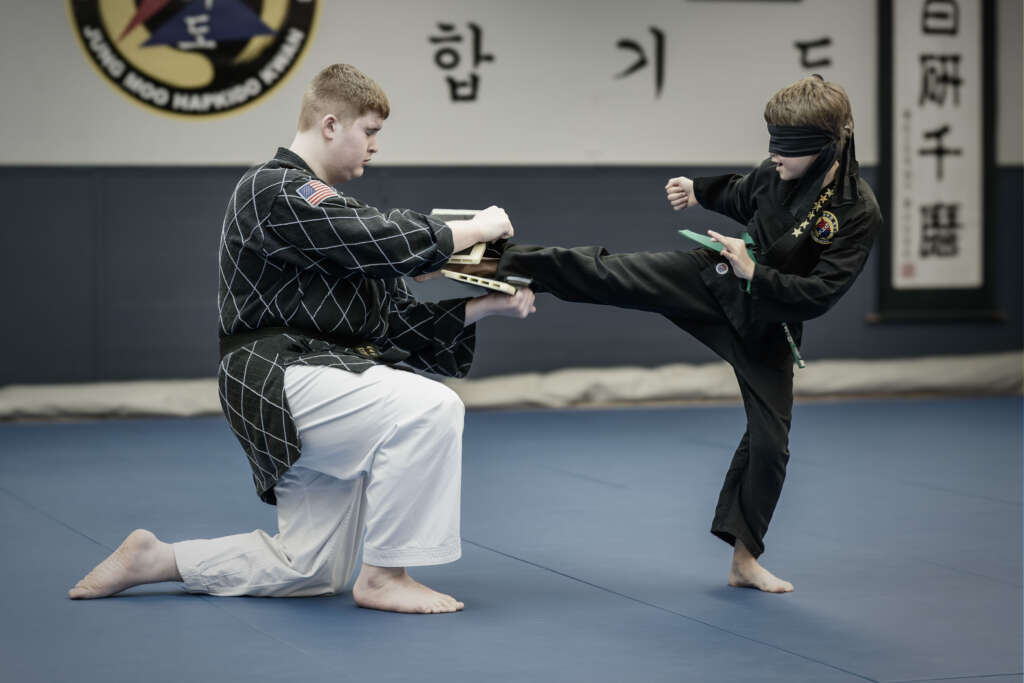
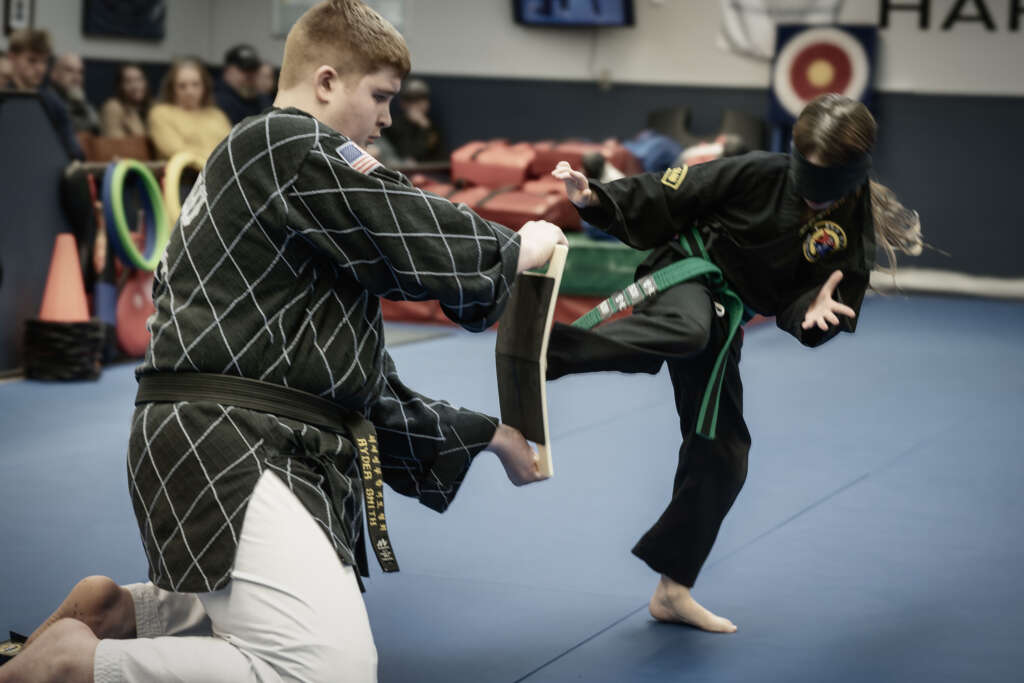
A 9 year old boy testing for Advanced Green Belt, and an 8 year old girl testing for Purple Belt, both intermediate color belt levels, successfully completed their required skill set demonstrations blindfolded. This included a board break in which they had to locate the board by sound, align their base, and execute a turning kick to break the board.
This type of performance requires more than courage. It requires body awareness, balance, trust in training, breath control, precision, and the ability to stay calm while working with limited sensory input. Both students performed exceptionally well, and they demonstrated the kind of focus and determination that serious training develops over time.
Breaking is often the most visible part of a grading, and for families it is often one of the most memorable moments. It is exciting to watch, but it also serves an important educational purpose. Breaking is a focused test of skill.
It requires the student to maintain structure, generate force, and deliver that force with precision. It is not simply a test of strength. Without alignment, timing, and commitment, power alone is not enough.
Breaking helps students understand that confidence comes from preparation. They learn to trust their training, commit to the technique, and execute with clarity. They also learn that hesitation affects performance, while focused intent improves it.
In this way, breaking becomes a personal test of skill and self control. The board responds to correct mechanics and decisive execution. For students, this is a meaningful lesson, success is built on preparation, precision, and commitment.
This grading was about more than moving to the next rank. It was about students learning to remain steady under pressure, control their breath, stay focused, and persevere. It was about skill development, confidence, and character. Most of all, it was about growth that has been earned through consistent training.
We are proud of all 10 students who stepped into the grading circle and gave their best effort. They earned their place there, and they earned their promotions with discipline, courage, and heart. We also extend our appreciation to the families who continue to support their children’s journey in training.
HapKi!
Terry
![]()
![]()
![]()
Events, Closures, Schedule Changes, News and more…fast.
Choose text, email, or both.
Unsubscribe anytime.